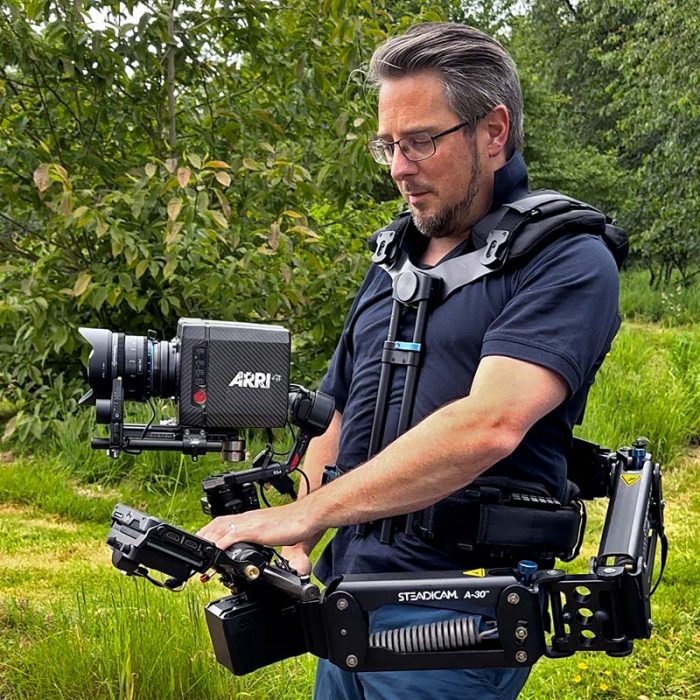
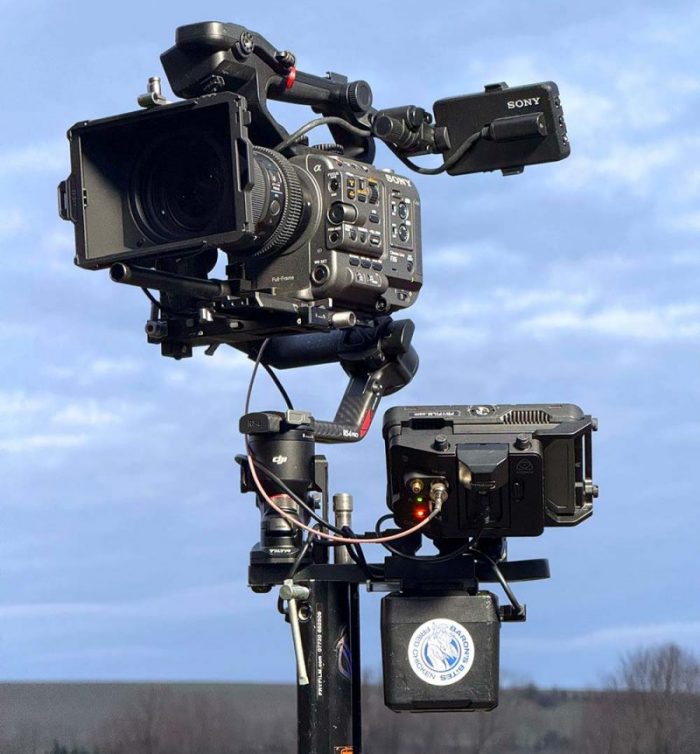
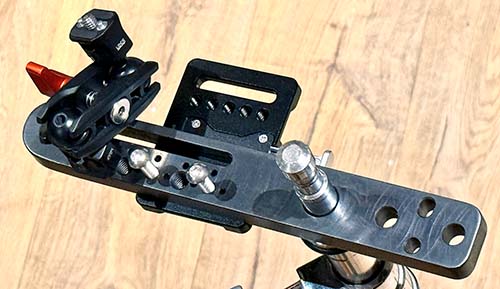
The Steadigimbal bracket was an idea born, as the best are, of necessity. I knew I was losing Steadicam work to gimbals, even if it was still me operating, but the gimbals are such a compromise.
Holding them with your arms you can’t put much weight on them without significantly impairing your operating time, which means small batteries reducing time between breaks, small monitor giving less precise composition and more chance of mistakes, and each part is powered separately resulting in lots of different pauses in filming to change camera, gimbal, or monitor batteries.
Then there’s what we call ‘visible footsteps’ or the jolt up and down as the operator walks along holding the gimbal with both hands, and is an immediate unwelcome giveaway to gimbal shots, especially compared to Steadicam.
Steadicams are wonderful, and provide natural, smooth movement to any camera from a DSLR to IMAX. They power everything from one or two huge batteries, smooth out footsteps via the isoelastic arm, and take all the strain from the operator’s arms and back with the very comfortable vest. But, they are expensive, not only to buy, rig up and maintain, but also to hire for productions, which is why gimbals initially were seen as a great budget Steadicam alternative. They aren’t, they don’t do the same job in the same way.
Steadicams are entirely mechanical; gimbals are purely electronic. The difference once you know what to look for in the footage is quite noticeable. Panning and tilting is all controlled by a computer algorithm in gimbals, whereas the camera on a Steadicam is manipulated by the very gentle touch of three or four fingertips.
The Steadigimbal is designed to make the best of both systems, for those filmmakers without the budget for a full Steadicam, but want more weight capacity, operating time and added accessories than a handheld gimbal can realistically accommodate.